Quartz materials and
custom components
Material selection is part of the specification. We review wavelength range, thermal duty, contamination limits, geometry, and inspection requirements before quotation.
Quartz glass is not one material.
Natural fused quartz, selected low-OH grades, and synthetic fused silica may look similar, but they are not interchangeable in every application.
Wavelength, OH content, purity, thermal duty, geometry, available stock format, and documentation requirements should be reviewed together before a grade is specified.
Choose the family first. Confirm the exact grade second.
The three groups below are useful starting points. Exact grade, source, certificate scope, and inspection plan are confirmed case by case.
Natural fused quartz
General-purpose familyNatural quartz feedstock is fused into amorphous SiO₂ glass. It is a practical starting point where thermal stability, fabrication flexibility, and cost control all matter.
Tubes, rods, flanges, chambers, crucibles, laboratory parts, and general thermal-process components.
Trace metals, bubbles / striae, operating conditions, optical requirements, dimensions, and inspection scope.
Selected low-OH fused quartz
OH-sensitive applicationsSelected low-hydroxyl grades are considered when OH content and infrared absorption behavior matter to the application.
IR-sensitive parts, lamp-related components, selected thermal-process applications, and projects with a defined OH requirement.
Target OH level, wavelength range, thermal duty, available stock format, dimensions, and required documentation.
Synthetic fused silica
Higher-purity selectionSynthetic fused silica is considered for tighter purity, ultraviolet transmission, and contamination-control requirements. The exact grade still depends on the application.
UV-related optical parts, windows, contamination-sensitive laboratory components, and selected semiconductor-related applications.
Transmission band, trace metals, OH, homogeneity, striae, surface finish, available format, and inspection method.
A material family is only the starting point. For critical applications, send the drawing and operating requirements before the final material grade is selected.
Common starting points for custom work.
These categories are not a fixed catalog. Dimensions, material grade, process route, and inspection scope are reviewed against the drawing and application.
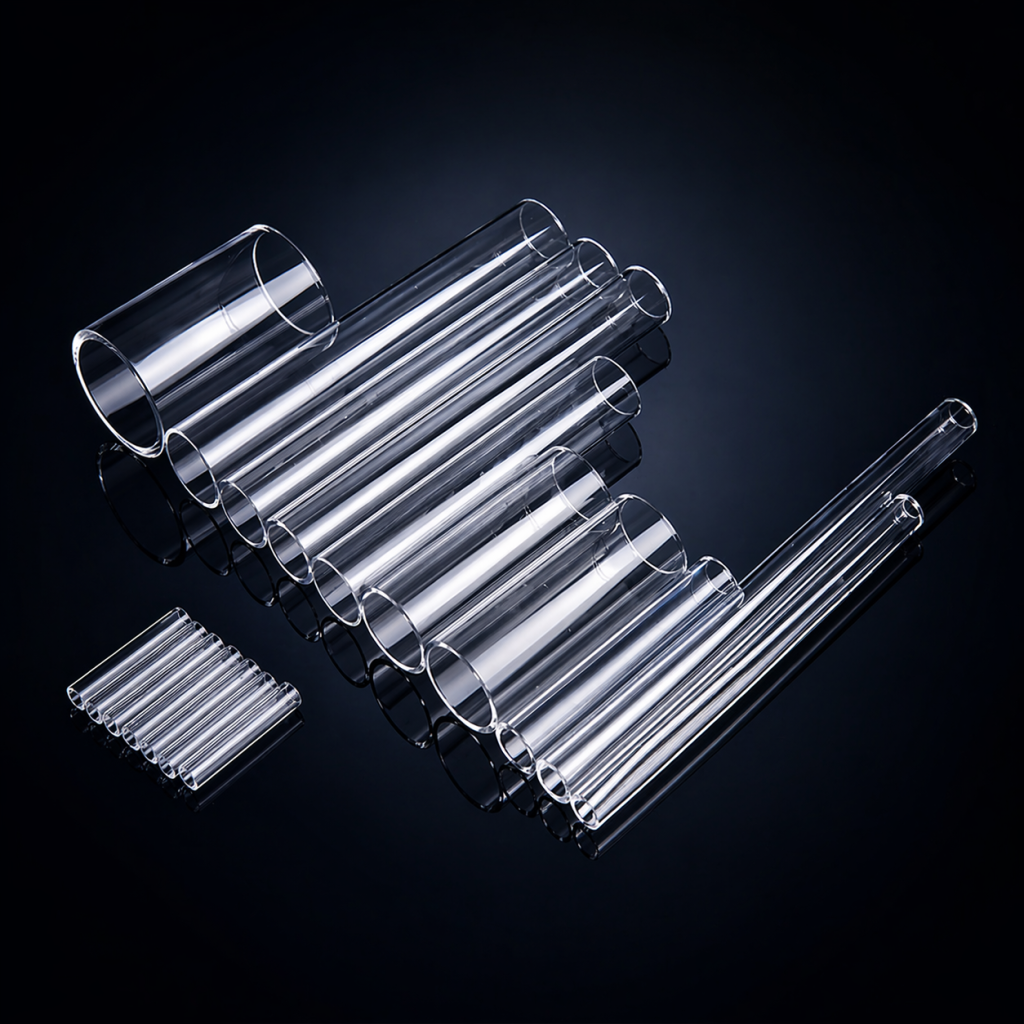
Fused quartz tubes & rods
Transparent and opaque grades for furnace components, diffusion processes, laboratory equipment, and structural quartz parts. Size, wall thickness, length, and tolerances are reviewed against the drawing.

Optical plates & windows
UV, visible, and IR transmission grades for optical systems, laser paths, and inspection windows. Flatness, surface quality, parallelism, coating, and inspection method are quoted case by case.
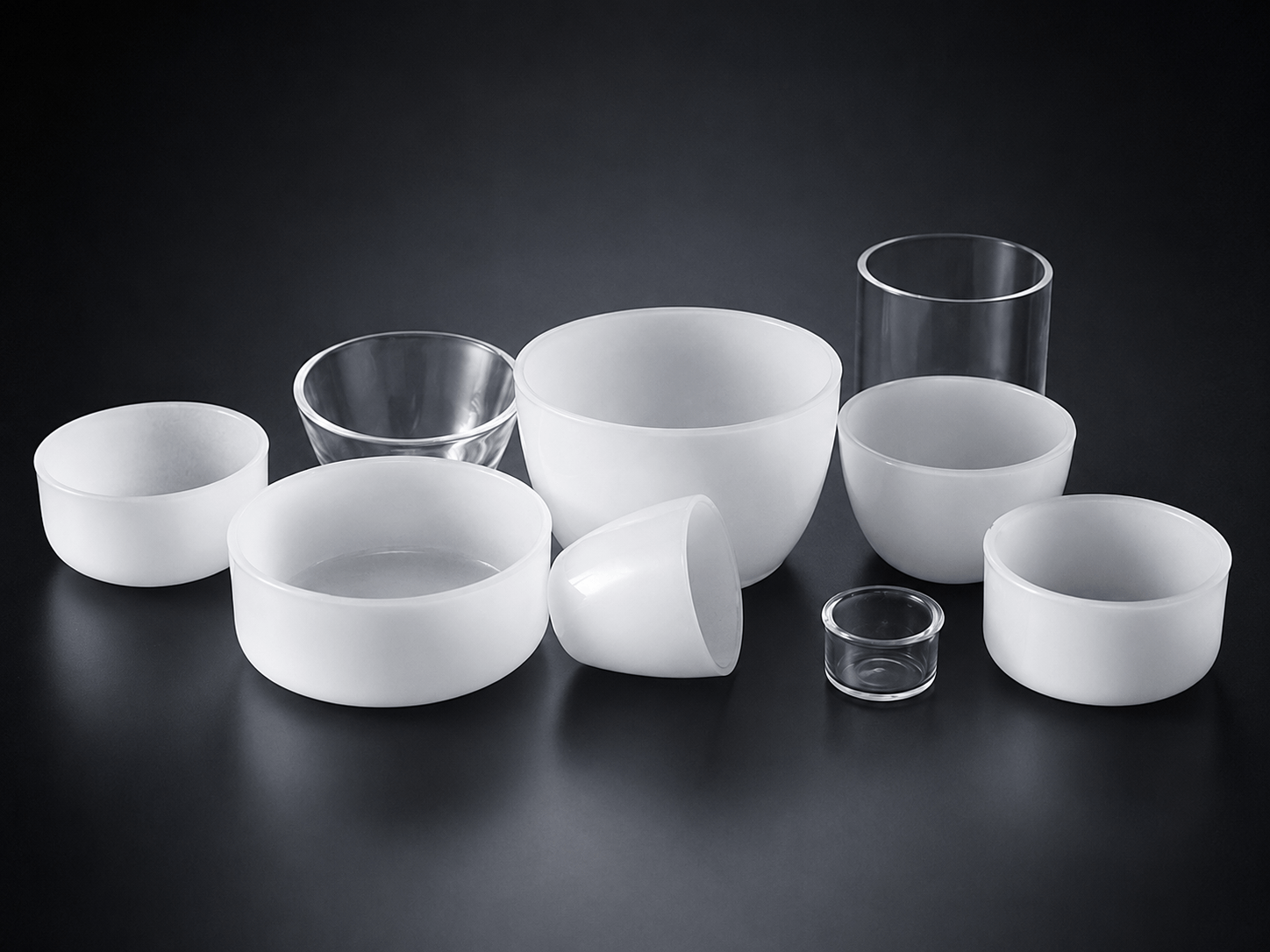
Crucibles & boats
Quartz crucibles and custom boat geometries for laboratory, thermal-processing, and specialty applications. Dimensions, grade, and process conditions should be confirmed before production.
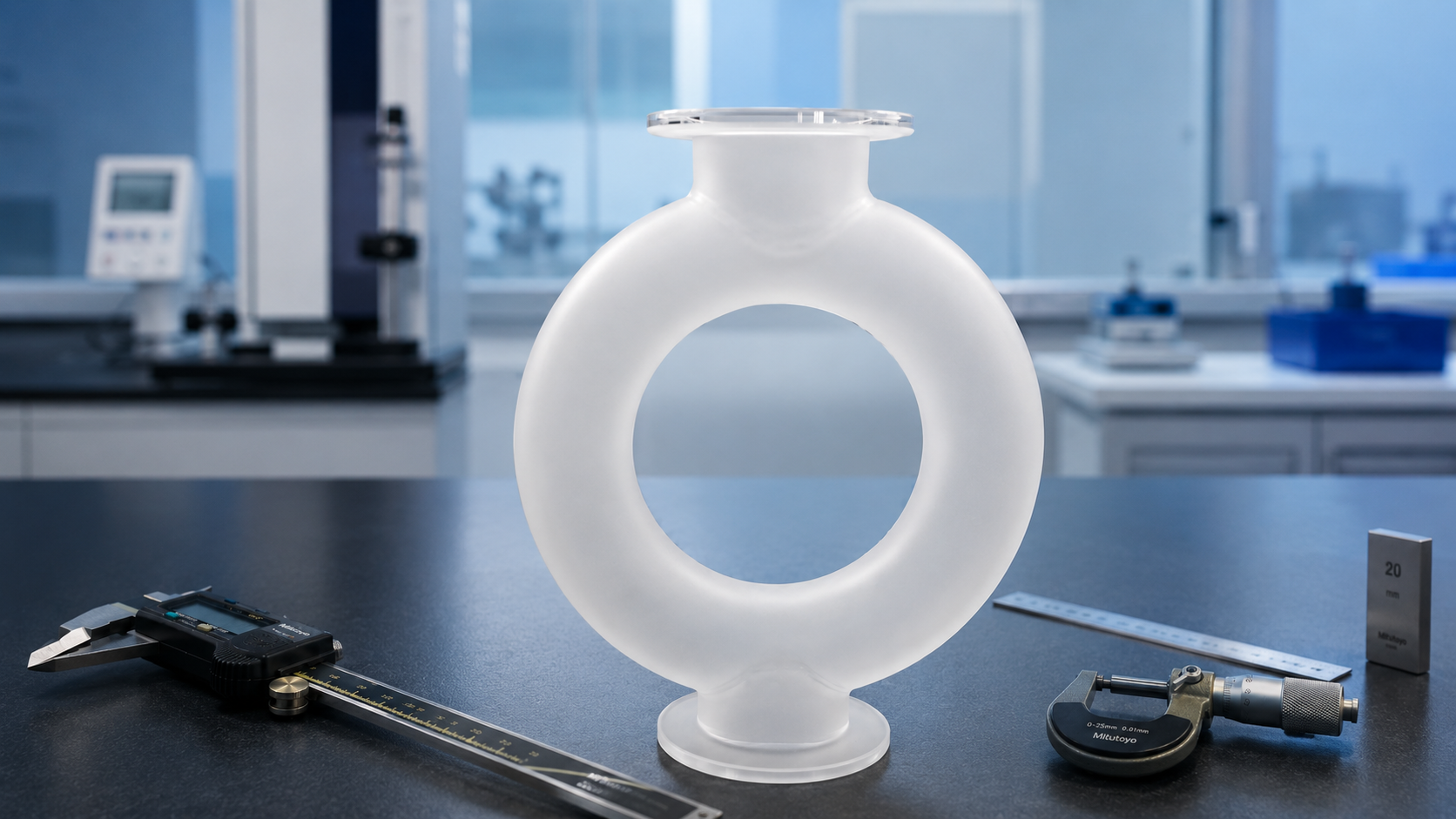
Semiconductor process parts
Diffusion tubes, wafer-handling parts, chamber components, and other drawing-based quartz parts for process equipment. Purity, dimensional control, and inspection requirements are reviewed together.
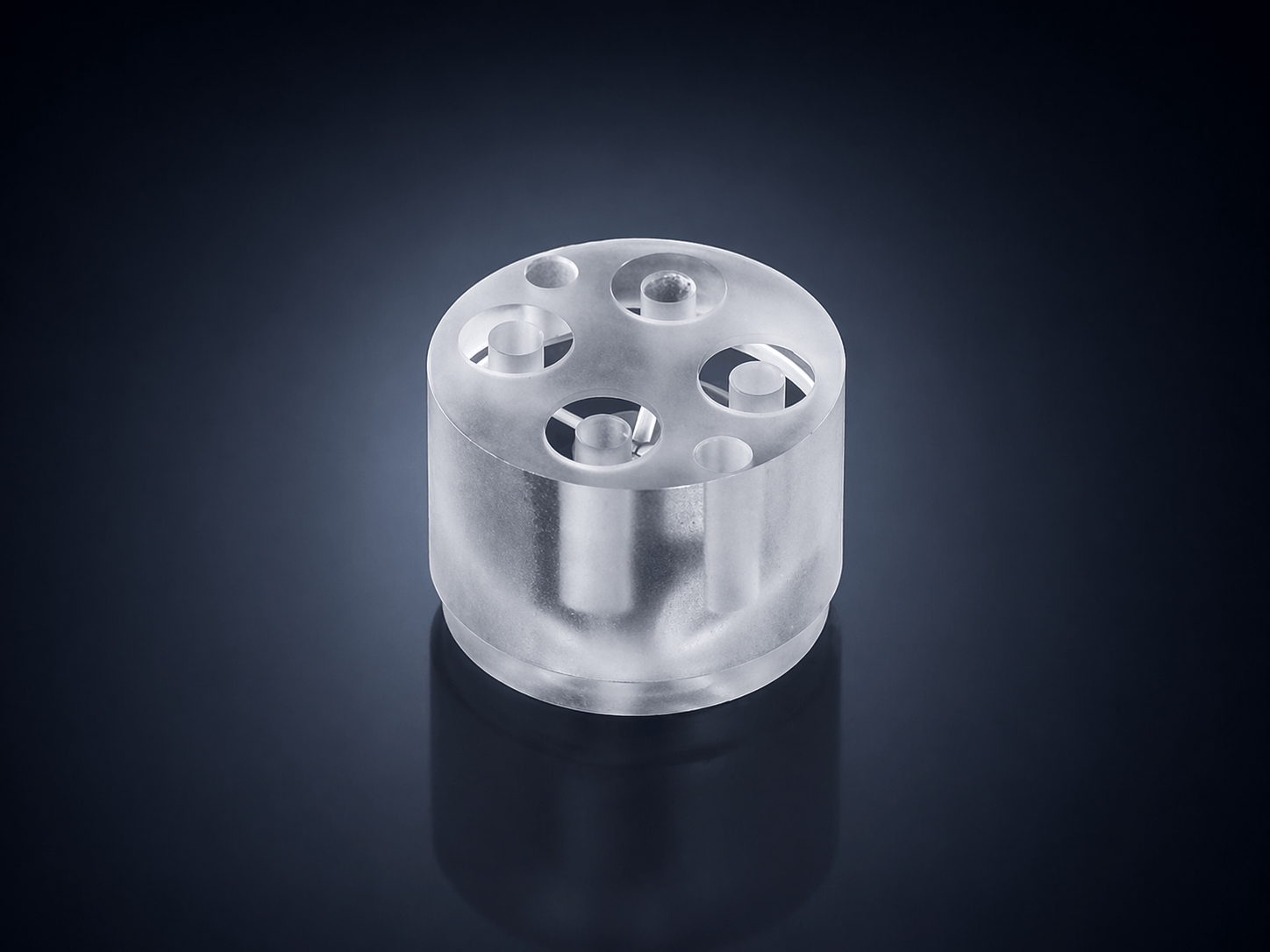
CNC-machined custom parts
Precision-machined quartz components made to drawing. Suitable geometries can typically be controlled to ±0.05 mm, with tighter requirements reviewed against size, shape, and inspection method.
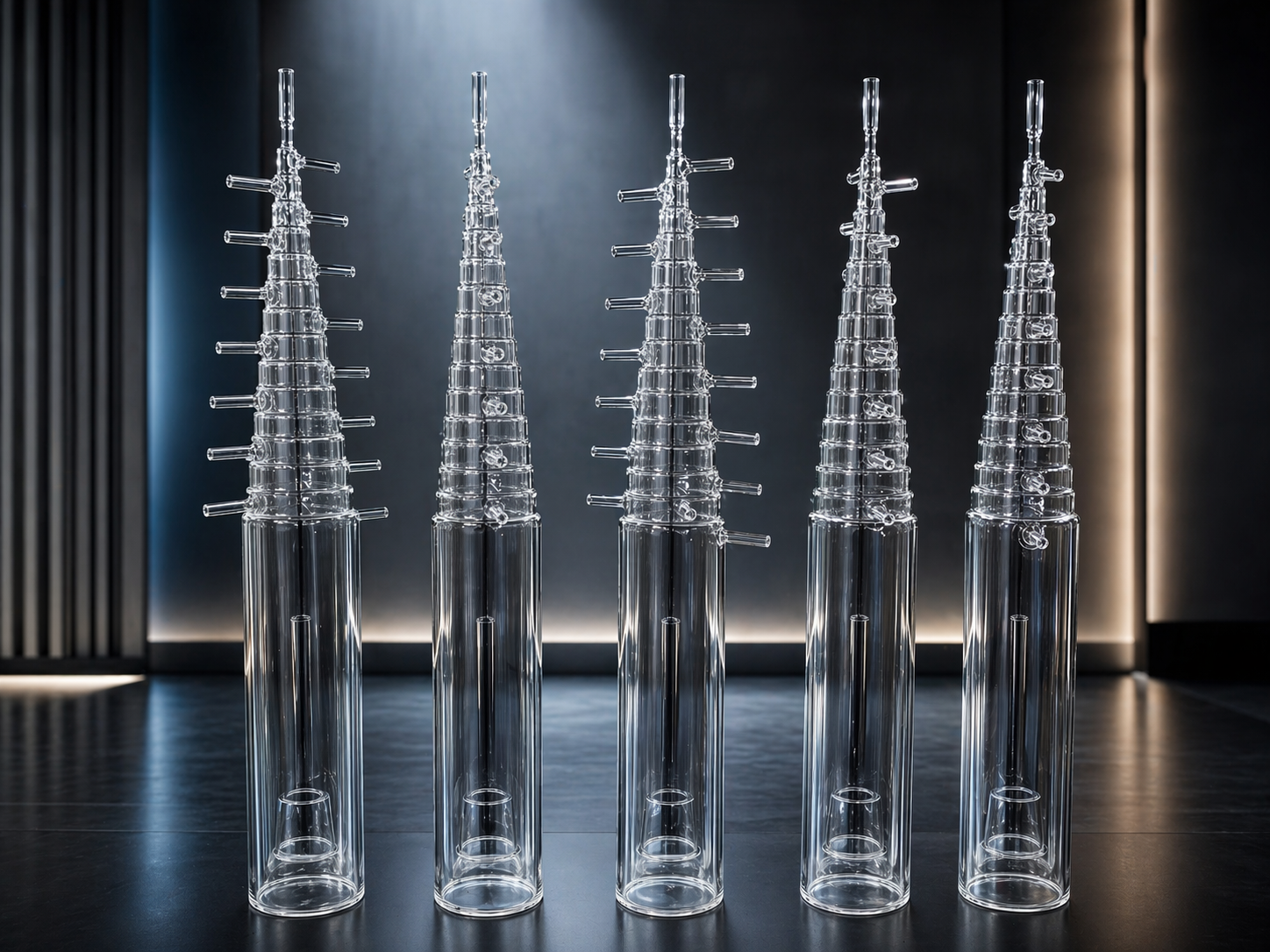
Quartz burners & fused assemblies
Hydrogen–oxygen burners, connectors, flanges, and multi-component quartz assemblies joined by fusion welding for optical-fiber, thermal-processing, and other process applications.
Define the requirement before the grade.
A material name is useful, but the operating requirement determines what the specification actually needs to control.
What does the part need to do?
Wavelength, temperature, contamination environment, mechanical role, and the way the part interfaces with the surrounding system.
Which properties actually matter?
Purity, OH, transmission, homogeneity, bubbles / striae, available stock, and compatibility with the required fabrication route.
What needs to be documented?
Certificate scope, inspection method, surface requirements, critical dimensions, and the final acceptance condition.
selection guide
Fused Quartz vs. Fused Silica
A longer reference on purity, OH content, UV / IR transmission, representative properties, and how to select a sensible starting material.
Read the material guide →Do not see exactly what you need?
That is normal. Most of our work is custom. Send a drawing, sample photo, or application requirement. We will review the material, process route, and critical specifications before quotation.