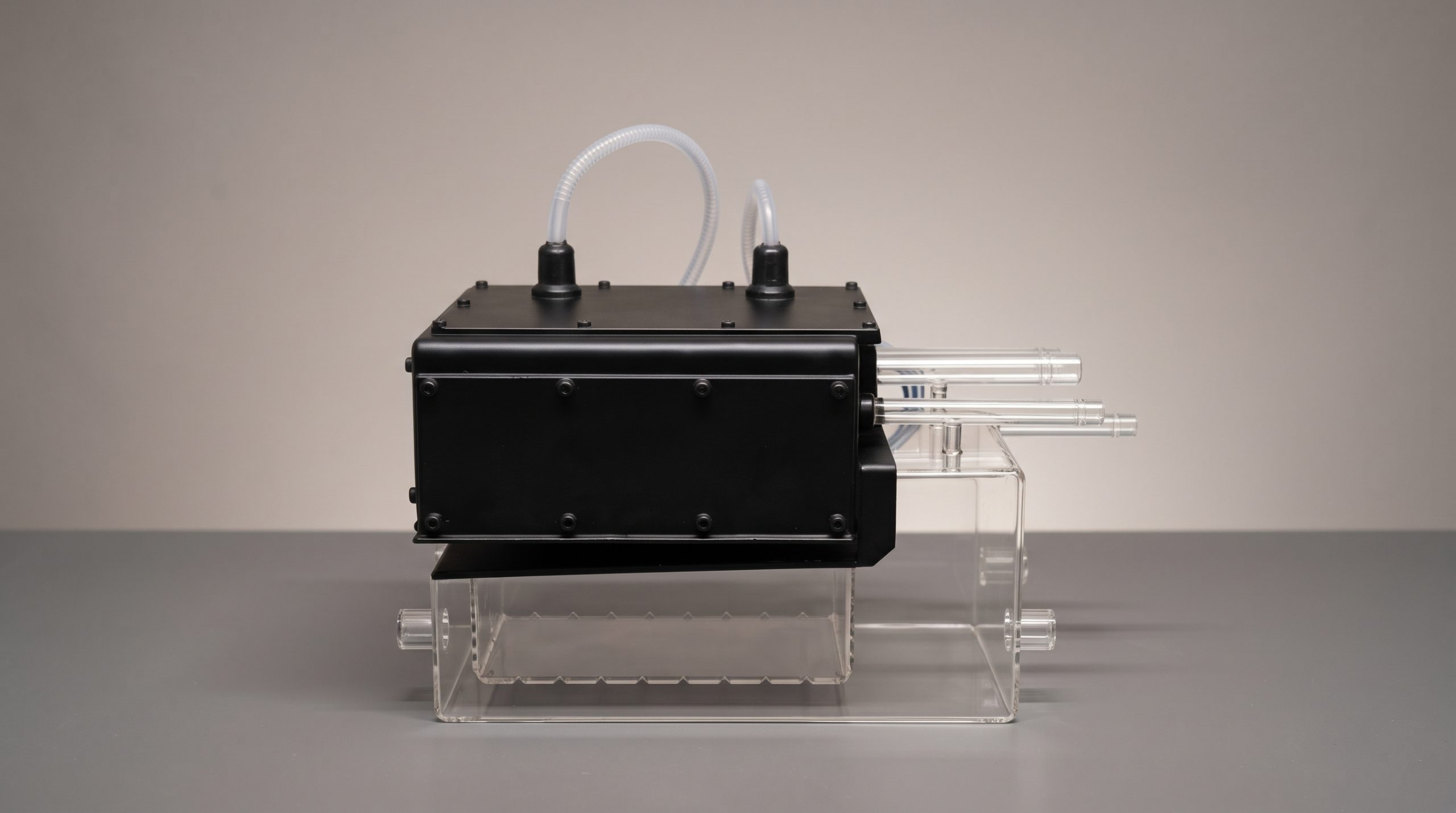
In semiconductor wet processing, a cleaning tank is part of the process—not just a container.
Its surfaces contact the chemistry, and its design affects how the bath is heated, drained, maintained and kept clean.
Fused quartz is a practical choice for certain high-purity wet processes. But material compatibility must be established before tank geometry or price is discussed.
A quartz tank is only as suitable as its process conditions. Check chemical compatibility first, then material grade, vessel design and manufacturing feasibility.
Why fused quartz is used in wet processing
Fused quartz combines low thermal expansion with good resistance to many mineral acids. High-purity grades are also available with controlled trace-element levels. These properties make it a useful vessel material for selected heated acid-cleaning steps, including sulfuric acid–hydrogen peroxide mixtures (SPM), subject to the specific process conditions.
Purity, however, is not a single number. A material’s stated SiO2 content does not by itself establish how much contamination a finished tank may contribute. For contamination-sensitive applications, the material grade, fabrication methods, final cleaning and agreed inspection requirements all matter.
Where quartz is not the right material
A quartz tank should not be specified simply because the process is called “wet cleaning.” Chemistry determines suitability.
Hydrofluoric acid (HF) and buffered oxide etch (BOE) solutions attack silicon dioxide, the material from which fused quartz is made. Hot concentrated phosphoric acid and strongly alkaline solutions can also attack quartz; their suitability requires particular caution and process-specific evaluation.
Even the label “RCA cleaning” is insufficient for material selection. Different RCA steps use different solutions and operating conditions. The full chemistry—including concentration, temperature, exposure time and cleaning sequence—must be reviewed before a tank material is selected.
Design details that affect manufacturability
Once the chemistry is confirmed, the next challenge is making a tank that can actually be fabricated and integrated into the equipment.
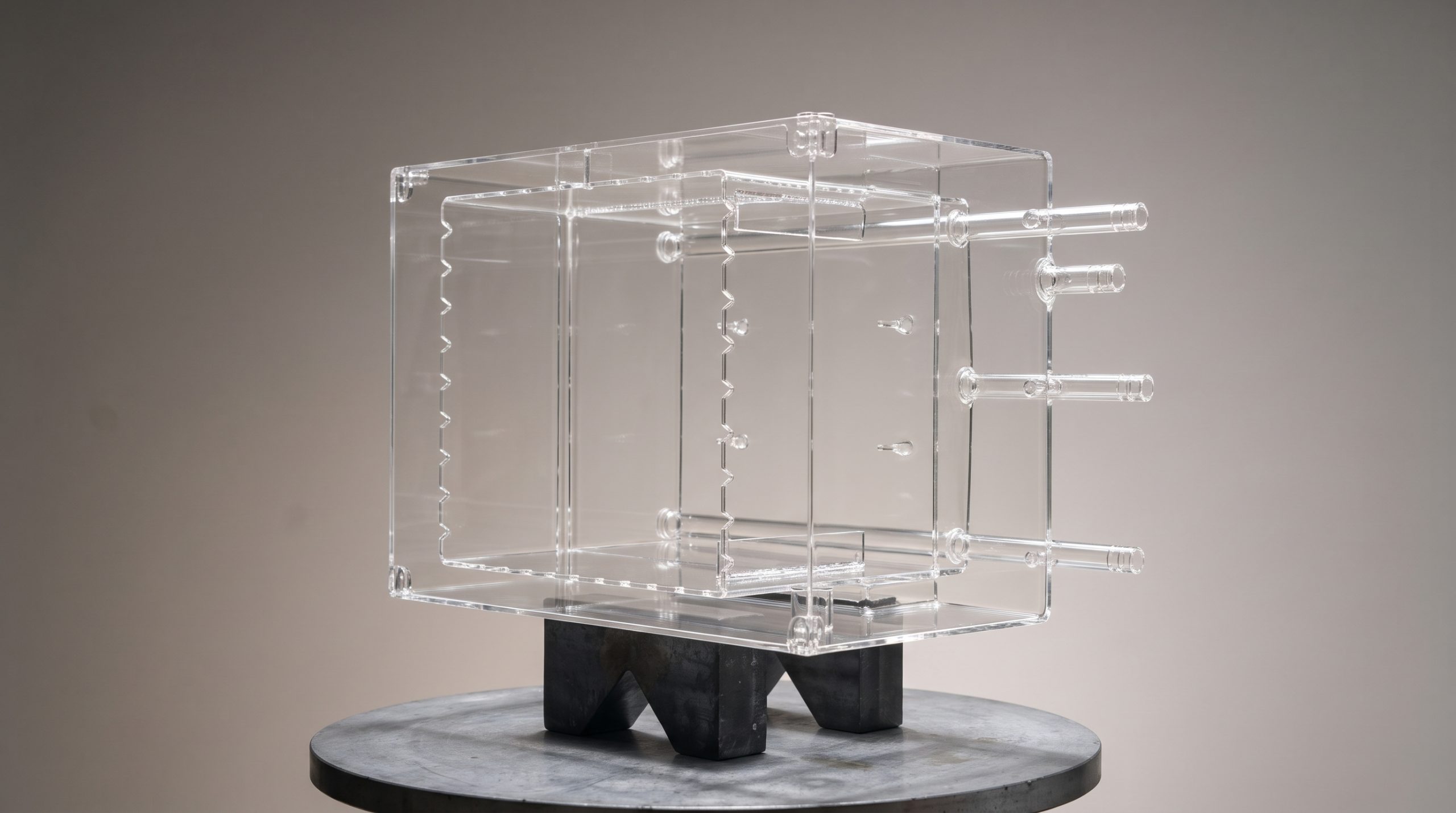
Wafer size alone does not define the vessel. Engineers also need to consider:
Internal dimensions & volume
Wafer carrier clearance, immersion depth and bath capacity.
Tank geometry
Wall thickness, panel dimensions, joints, corners and supports.
Ports & interfaces
Inlet and outlet ports, drains, overflow paths and fittings.
Operating conditions
Heating method, temperature range, thermal cycling and handling loads.
Acceptance criteria
Material traceability, dimensional checks, visual inspection, cleanliness and packaging.
Large-format quartz tanks are not necessarily straightforward scale-ups of smaller designs. Available stock sizes, fabrication access, joining geometry and handling constraints may determine whether a proposed configuration is practical.
A brief lesson from a feasibility inquiry
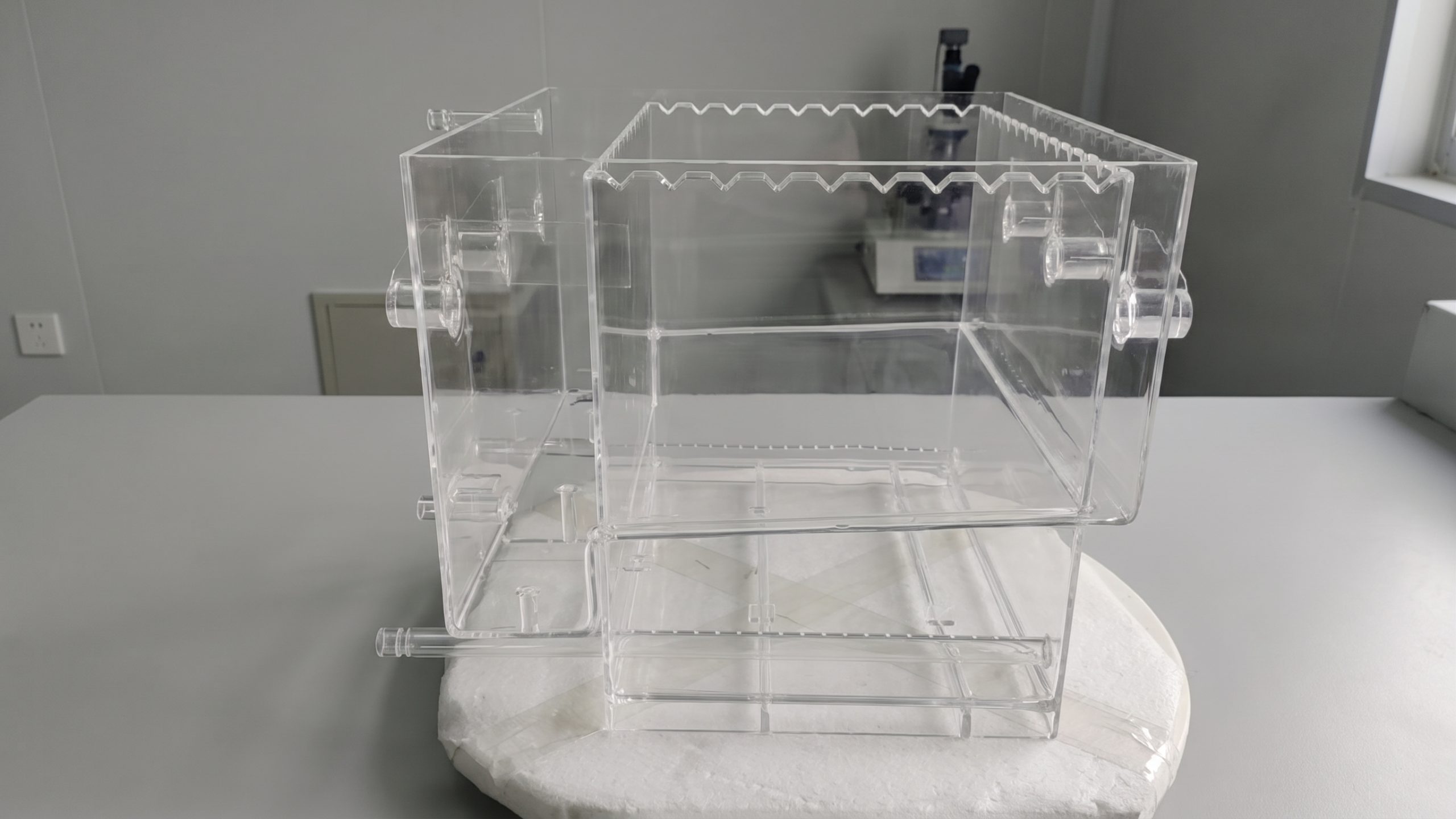
We previously reviewed an inquiry for a custom quartz cleaning vessel intended for semiconductor wet processing. In the preliminary manufacturing assessment, an 8-inch configuration appeared possible for further evaluation, while the proposed 12-inch configuration was outside the available fabrication capability.
The project did not proceed to production. It nevertheless reinforced a useful sourcing principle:
Confirm the achievable manufacturing envelope early, before treating a preliminary concept as a quotable design.
What to include in an RFQ
A drawing is useful, but a drawing alone rarely provides enough information for a reliable quotation. To evaluate a custom fused quartz cleaning tank, we recommend sharing:
- Process chemistry, concentrations, operating temperatures and exposure times.
- Wafer or carrier size, internal clearance and required working volume.
- Preliminary dimensions, connection layout, drain and overflow requirements.
- Material purity or traceability requirements and acceptance criteria.
- Expected quantity and any installation or packaging constraints.