In precision glass processing, a burner is more than a source of heat. Its outlet layout, gas delivery and head material all affect what happens at the workpiece.
A quartz glass burner is not automatically better than a metal burner. It becomes worth considering when reducing potential metal contamination near the flame and achieving a specific heating pattern matter more than having a conventional, rugged burner head.
What does a quartz burner actually change?
In selected hydrogen–oxygen (oxyhydrogen) applications, a fused-quartz burner head removes exposed metal from the flame-facing outlet area. This can reduce one potential source of metal-derived particles associated with oxidation or wear of metal nozzles under demanding service conditions.
That distinction matters in quartz tube and rod processing, joining and flame polishing, where contamination at the heated surface may be unacceptable. It does not mean the entire flame or gas system is automatically contamination-free; gas quality, upstream components and handling still matter.
Quartz also lends itself to custom fused assemblies with multiple outlets or gas passages. These can be arranged to produce a more concentrated or distributed heating zone, depending on the task. The result depends on outlet geometry and operating conditions—not simply on how many jets are visible at the burner face.
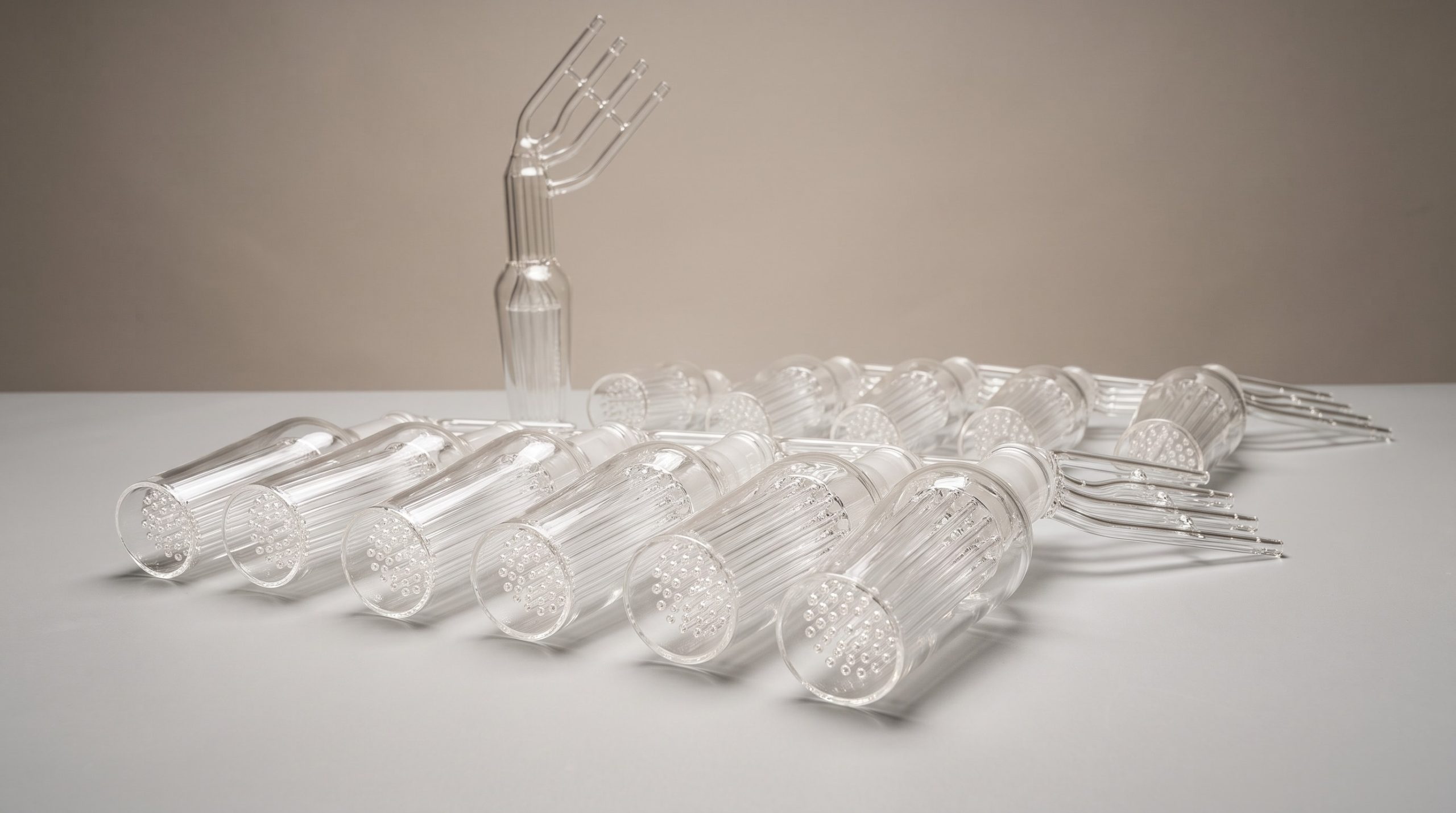
Quartz or metal: where is the trade-off?
The material decision should follow the operating requirements. Each option offers practical advantages and limitations.
| Selection point | Quartz glass burner head | Metal burner head |
|---|---|---|
| Metal-related contamination | No exposed metal at the quartz outlet face; may reduce that particular contamination source. | Performance depends on alloy, design and operating conditions; hot nozzles may oxidize or wear. |
| Mechanical handling | Brittle; requires protection from impact, bending loads and poorly supported connections. | Generally more resistant to mechanical handling and easier to mount in rugged environments. |
| Outlet configuration | Custom fused multi-outlet arrays and gas passages are possible. | Machined outlets, replaceable tips and adjustable hardware are available in many designs. |
| Cost and serviceability | Custom construction and careful inspection may be justified for sensitive processes. | Standardized designs can be more practical where maintenance, speed and cost dominate. |
Swipe the table horizontally to see the full comparison.
Neither material automatically produces a hotter or more stable flame. Those outcomes depend on the gases, the outlet design, operating conditions and integration with the equipment. Metal burners remain a sensible choice for many applications.
How to specify the right quartz burner
Before selecting a burner or requesting a quotation, clarify five points.
-
The heating task
Are you working with a quartz tube, rod or larger assembly? Is the goal local heating, sealing, joining, flame polishing or heating over a wider area?
-
The required flame footprint
A focused flame, a broad heating zone and a multi-jet arrangement solve different problems. Outlet count by itself is not a performance specification.
-
The gas circuit
Confirm the intended gases, separate gas paths, available supply pressures and flow ranges. ZPURE’s current quartz burner work is primarily focused on hydrogen–oxygen systems; other fuels require a separate compatibility review.
-
The equipment interface
Burner length, mounting method, handle, inlet connections, working clearance and orientation all affect whether a proposed design can be used.
-
How performance will be verified
Discuss flame distribution, heating consistency, visible damage, cleanliness expectations and trial conditions before committing to a production quantity. Gas-system safety must also be reviewed by qualified personnel.
A photograph of an existing burner, a simple drawing and a description of what needs to improve can often make the initial technical review more productive.
Optical fiber burners are a different specification
Optical fiber production includes specialized burner applications that should not be confused with general quartz-glass flame working.
In VAD (Vapor-phase Axial Deposition) and OVD (Outside Vapor Deposition), the burner may help convert vapor precursors into silica soot and deposit it onto a growing preform. Gas-stream arrangement, reaction conditions and deposition geometry therefore matter alongside the flame.
A multi-channel quartz burner designed for sealing glass tubes cannot be assumed suitable for VAD or OVD just because the two products look similar. Optical fiber burner inquiries require a separate review of the actual process and gas-delivery requirements.
From burner drawing to a workable design
At ZPURE Quartz, we work with selected fabrication partners experienced in fused-quartz assemblies and custom burner construction.
Our focus is to clarify the application, review gas paths and outlet geometry, and coordinate a manufacturing route that matches the customer’s equipment.